
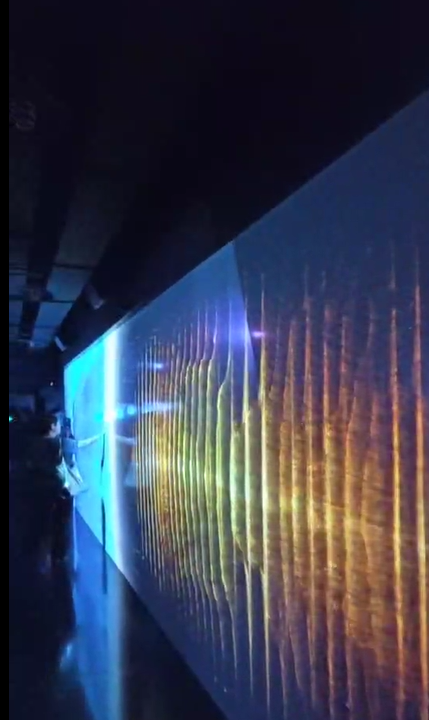
Japan, South Korea, and China


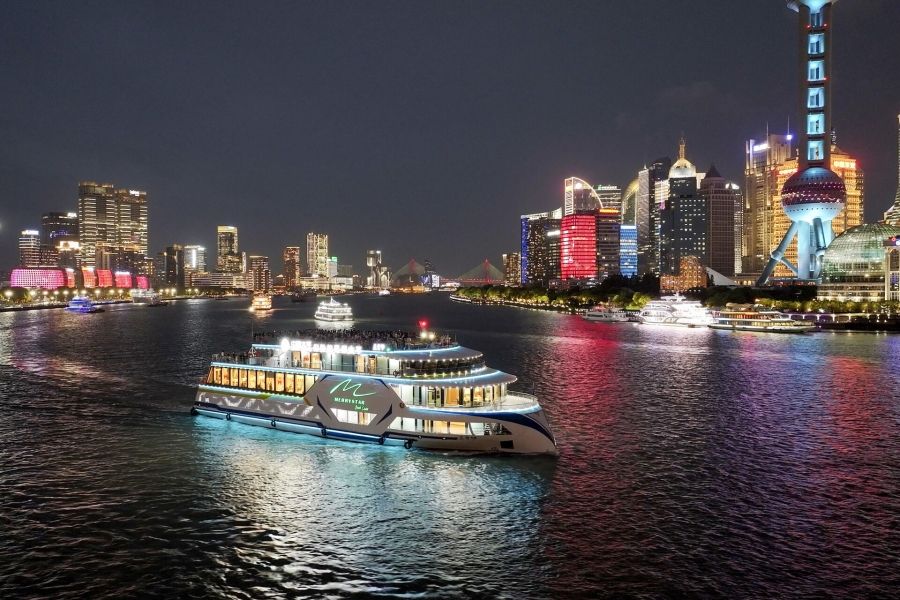
Something I’ve always believed is that travel changes how you see the world.
However, this trip — across Japan, South Korea, and China — didn’t just shift my perspective. It reshaped how I think about technology, creativity, and experiences.
Japan: Where Culture and Detail Are Everything
In Tokyo, everything feels intentional.
From the chaos of Shibuya Crossing to the precision of the metro system, there’s a balance between energy and control that’s hard to explain until you experience it.
Then you go to Kyoto, and everything slows down.
Temples, narrow streets, silence, history.
And somehow, both worlds coexist perfectly.
In Osaka, you feel something different again — a more energetic, social vibe, especially around food and nightlife.
One of the most interesting experiences was visiting Super Nintendo World.
It’s not just a theme park.
It’s a fully designed interactive experience.
Everything is gamified, intentional, and makes you feel like you’re inside a digital world.
And that’s something Japan does incredibly well:
They don’t just build attractions — they build experiences with meaning and detail.
China: The Future Feels Closer
If Japan feels like refined design, China feels like acceleration.
In Shanghai and Beijing, what impacted me the most wasn’t just the architecture — it was how integrated technology is into everyday life.
Almost everything runs through apps.
Payments, transportation, services — everything is seamless.
You don’t think about it.
You just use it.
It made me realize something:
The future isn’t always about new inventions.
Sometimes it’s about how smoothly technology fits into daily life.
And in China, that integration feels years ahead.
South Korea: Public Spaces as Digital Canvases
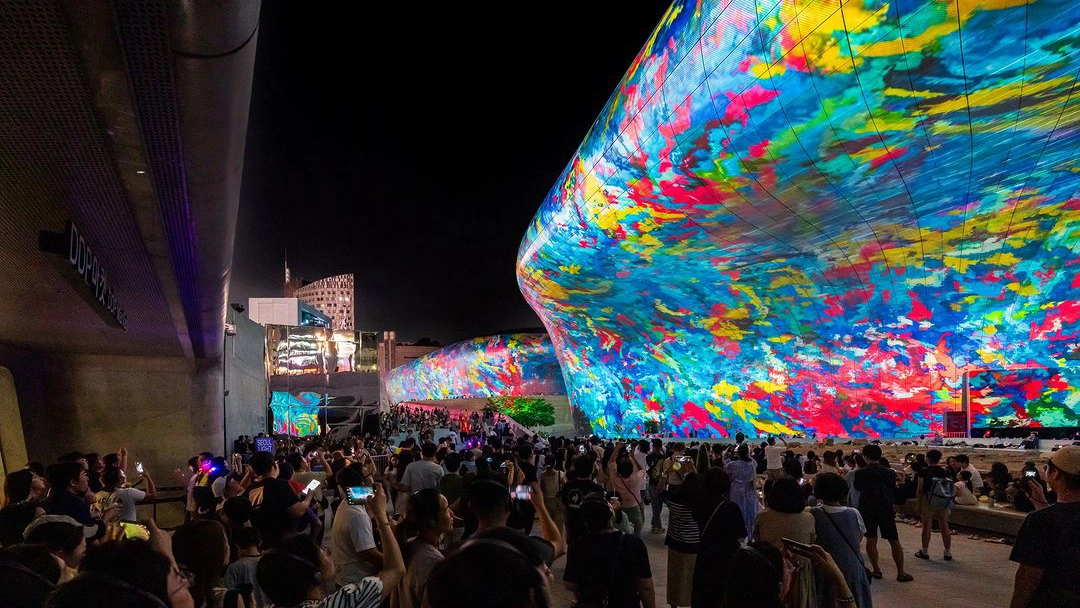
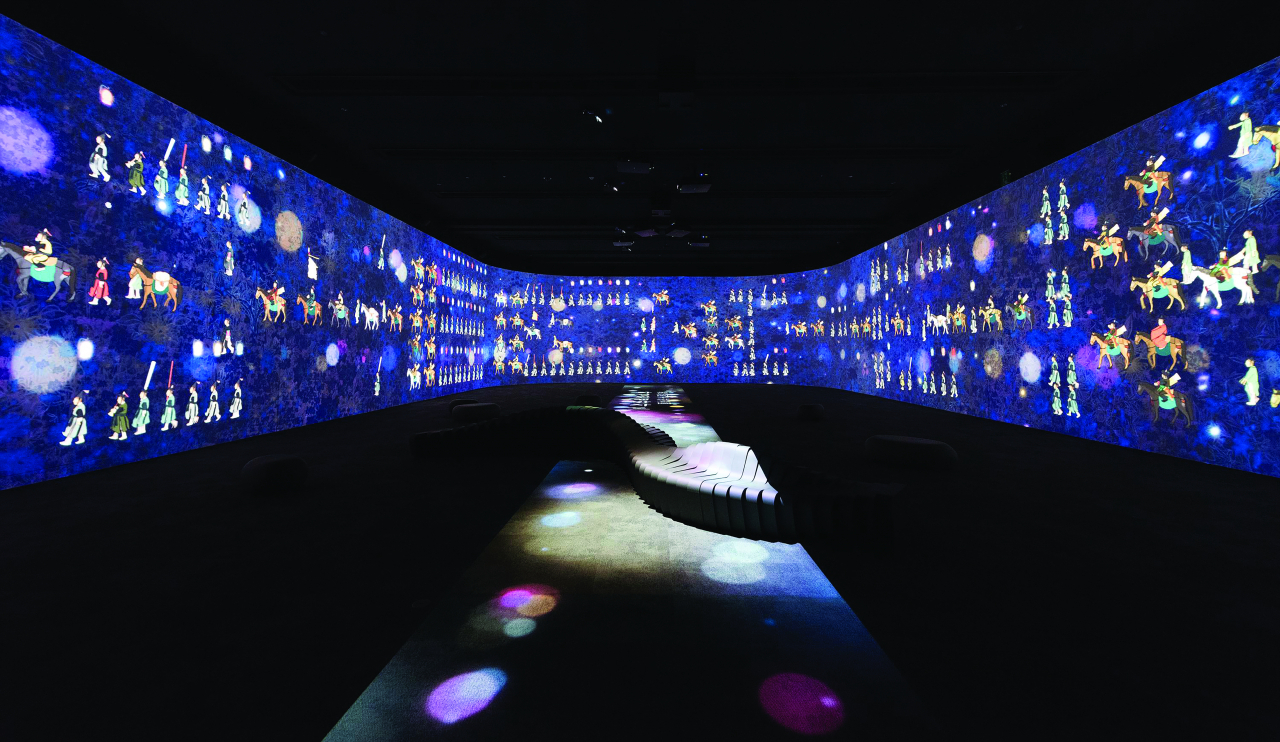
In Seoul, what stood out the most was how technology is used in public spaces.
Not just for function — but for expression.

4
You see:
- projection mapping on buildings
- immersive digital installations
- large-scale screens used as art
- interactive environments in public areas
It feels like the city itself becomes a platform for creative technology.
And that’s something I found really inspiring.
Because it shows how immersive experiences don’t have to live only in events or museums — they can exist in everyday environments.
What This Trip Taught Me
Each country had a different strength:
- Japan → attention to detail and experience design
- China → technology integrated into daily life
- South Korea → creative use of public digital spaces
But the biggest takeaway was this:
Technology alone is not what creates impact.
It’s how it’s used.
How it’s designed, people interact with it, and it fits into culture.
As someone working in 3D, immersive experiences, and creative technology, this trip gave me a new perspective.
Not just on what’s possible —
but on what actually works in the real world.
Final Thought
Sometimes inspiration doesn’t come from tools or trends.
It comes from seeing how different parts of the world approach the same ideas in completely different ways.
And this trip reminded me why I’m drawn to this space in the first place:
Because at the intersection of technology, culture, and creativity, there’s still so much to explore.